Headaches and dizziness after concussion are common and can affect comfort, balance, concentration, and daily activities. These symptoms may have different causes and can change over time. Understanding why headaches and dizziness occur, and how they are assessed and managed, can help support recovery and reduce their impact on everyday life.
Headaches and Dizziness After Concussion
Headaches are a very common symptom after a concussion
Post-concussion headaches can be different from normal headaches and can present in various forms
Medications can be helpful to ease headaches. However, understanding the cause of your headache can be more helpful to reduce them over time


Different types of headaches
There are different types of headaches, a few of which can present post-concussion.
Examples of post-concussion headaches include those resulting from:
- Fatigue
- Tension in the neck
- Fluctuations in stress and blood pressure
- Visual disturbances
- Jaw pain
- Medication-overuse
Understanding Your Headaches
Tracking and understanding your headaches can be extremely useful for managing them
Using the COLDERR acronym can
be useful for this:
Character
A description of how the pain feels
Onset
When do your headaches happen?
Location
Where on your head do you feel your headaches?
Duration
How long do they last?
Exacerbation
What makes your headaches worse?
Relief
What makes your headaches better?
Radiation
Does the pain spread anywhere else?


Managing Fatigue
- With fatigue being one of the leading causes of post-concussion headache, managing this can be helpful for reducing your headaches
- Get enough sleep at consistent times. Naps before 3pm and shorter than 1 hour can be helpful if needed
- See our other resource for tips on how to manage fatigue
Exercise
- Exercise is great for the body and mind’s health in so many ways. Appropriate levels of exercise can help to reduce headaches
- See our other resource for tips about exercise after concussion
- Speak to your physiotherapist about how to most appropriately exercise post concussion


Stress
- Stress can contribute to post-concussion headaches and therefore lowering stress levels can help to reduce your headaches
- Practicing mindfulness can help to improve headaches
- Psychology input under our service may be beneficial to help manage this. See our other resource on managing mood after concussion
Medication Overuse
- Taking too much pain relief medication can actually cause headaches! Particularly strong opioid painkillers like tramadol or codeine
- Many post-concussion headaches can be adequately managed with paracetamol (Panadol) and ibuprofen (more than 48hrs post-injury and taken with food & water)
- Medication should not be the only solution to managing headaches long-term
- Consult your doctor or treating team regarding pain medications


Visual Disturbances
- A concussion can result in visual disturbances that include how well your eyes are moving (oculo-motor) and acuity (clarity & focus). These visual disturbances can contribute to headaches and dizziness
- Physiotherapy can assess for these issues and depending on findings of the assessment, physiotherapy may offer strategies and exercises to help improve vision and oculo-motor difficulties
Dizziness
(Vestibular and other causes)
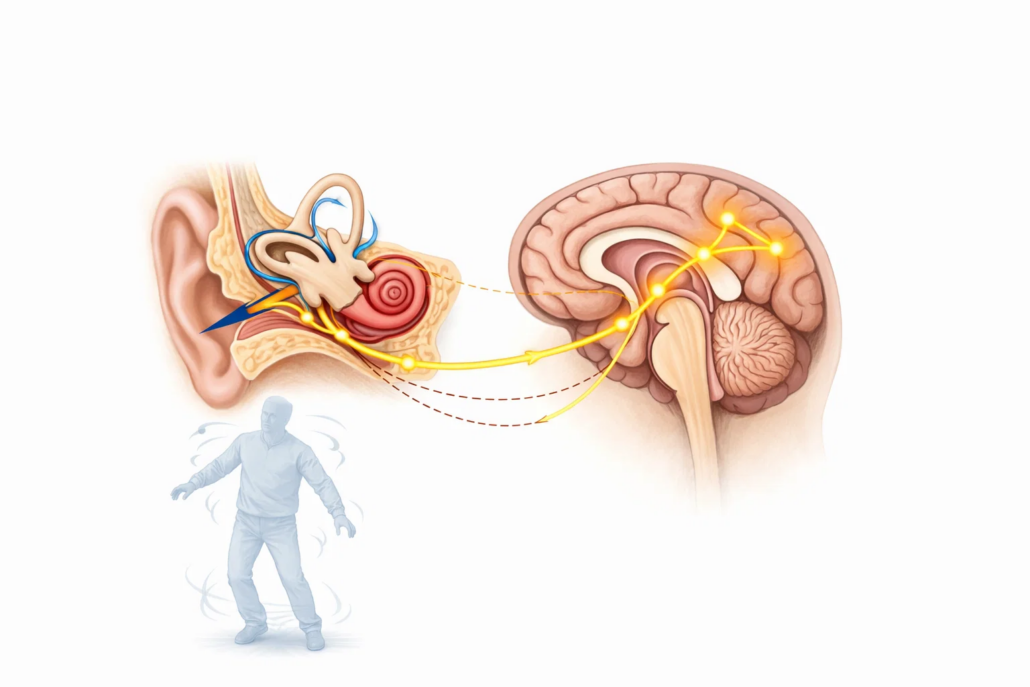
Located in your inner ears, your vestibular system sends messages to the brain regarding how your body is moving
Issues in this communication as a result of a concussion can lead to dizziness, nausea, balance issues, and headaches
Dizziness should be assessed by a physiotherapist who may be able to help reduce the dizziness with exercises and treatment techniques

Consult your Physiotherapist
Physiotherapy can help with headaches resulting from:
- Tension in the neck
- Issues of the jaw
- Visual disturbances
Physiotherapy can also help with dizzy symptoms resulting from the vestibular system and visual difficulties
Your Concussion Recovery Team
Your professional team can assess you to help understand and manage your headaches. They may include:
- Physiotherapist
- Occupational Therapist
- Speech Language Therapist
- Psychologist
- Medical Specialist/GP