Archive for category: News

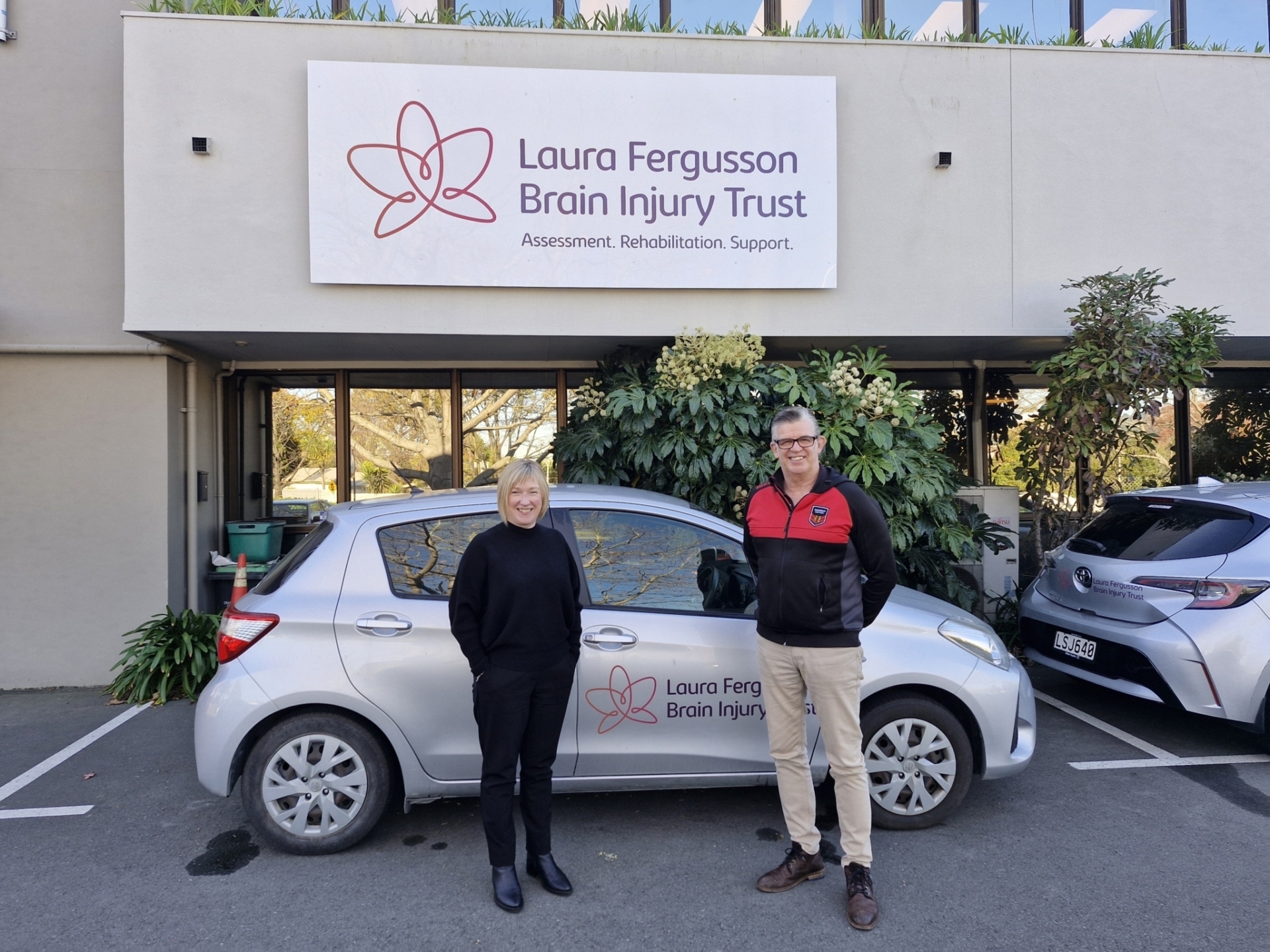
The Laura Fergusson Brain Injury Trust are delighted to have signed a Memorandum of Understanding with the Canterbury Rugby League. Hear more on this partnership from the CRL below

CRL has signed a groundbreaking Memorandum of Understanding with the Laura Fergusson Brain Injury Trust, providing invaluable support and education to our rugby league community.

This MoU – a first for the Laura Fergusson Brain Injury Trust with a regional sporting body – aims to ensure everyone in our sport has access to the necessary information, support and treatment in regards to head injuries and concussion.

“CRL are excited and feel very privileged to sign this MoU with the Laura Fergusson Brain Injury Trust,” Canterbury Rugby League CEO Malcolm Humm says.

“We recognise head injuries and concussions occur in our game from time to time. In light of this, as the regional body for rugby league, we believe we have a responsibility to provide expert support and advice to players who sustain these injuries.

“What the Laura Fergusson Brain Injury Trust will be able to support our membership with is monitoring, assessment and recovery plans, through to a return to sport plan.

“Additionally, and as part of the MoU, they will provide education workshops to clubs, coaches, parents and CRL as a preventive measure.

“We feel the timing is perfect as NZRL recently released its new concussion policy, which marries well with the support CRL and its membership will receive from Laura Fergusson Brain Injury Trust.”

The Trust was established in 1967 and supports those impacted by brain injury in Canterbury and its surrounding regions – a provider unique to the South Island and one of only three in New Zealand.

Over 220 specialised staff in the charity’s interdisciplinary team which includes speech language therapists, physiotherapists, occupational therapists, clinical psychologists, neuropsychologists, dietitians, social workers, nurses and rehab coaches who work together to provide an integrated approach to rehabilitation and recovery.

“We see people who’ve had traumatic brain injury from all walks of life for all different reasons, and sports is one of the areas,” LFBIT CEO Kathryn Jones says.

“Our whole vision and our values relate to how people are treated – inclusively, [making sure] they’re treated respectfully and that we do the best that we possibly can so that people get the right treatment at the right time and recover.

“We are on that recovery journey with them and their families, too – that’s really important to us. I look at the values of Canterbury Rugby League and we are very aligned in terms of that inclusivity and respect.”

Māori and Pasifika make up a high proportion of Canterbury Rugby League’s demographic but, as Jones explains, are underrepresented in terms of making use of the services available to treat injuries.

“Māori and Pasifika people inherently have very low rates of making claims for injury through ACC – it’s not that they’re not getting injured, they’re just not making the claim and getting the proper treatment,” she says.

“We [want to educate] those communities so people who need help are more inclined to put in a claim and get the proper support they need after an injury.”

Jones regards rugby league as being one of the most proactive sports in caring for their players around head injuries, putting strong guidelines in place and providing wraparound support.

The danger of a ‘you’ll be right’ attitude, which Jones says still exists in some sports, is that people are missing out on the appropriate treatment for what could potentially be a serious problem.

Awareness and knowledge are crucial – and at the heart of the MoU between the Trust and Canterbury Rugby League.

“We provide free education to a whole range of organisations in the community,” Jones explains.

“We go out to see the Police, we see Work and Income, schools and community agencies … the more people who are educated about traumatic brain injury, the better.

“A brain injury occurs every 15 minutes in New Zealand – it happens a lot more often than people realise but understanding the signs and symptoms and where to get help, that’s ultimately what we want to achieve.

“We’re really keen to get out and about into the community and provide more education for rugby league players and their coaches and their families. It’s a great opportunity for us.”

Meanwhile, the Laura Fergusson Brain Injury Trust has embarked on a capital fundraising campaign to build a centre of excellence in Christchurch, designed as a hub for a range of services for people who have suffered a traumatic brain or spinal injury.

Jones says the partnership with CRL with be beneficial in raising the profile of the Trust, which is also charity partners with Canterbury Cricket, in the local community.

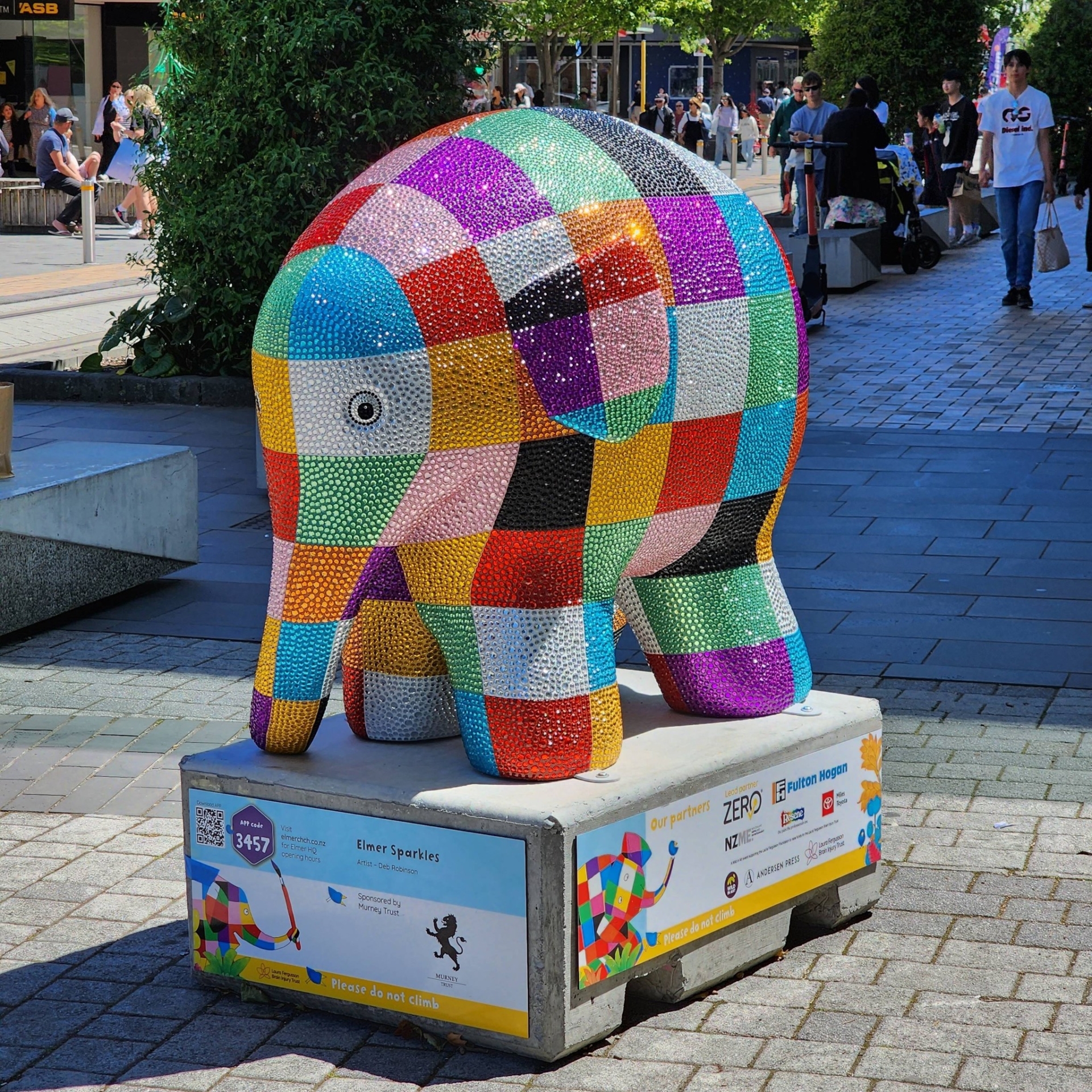
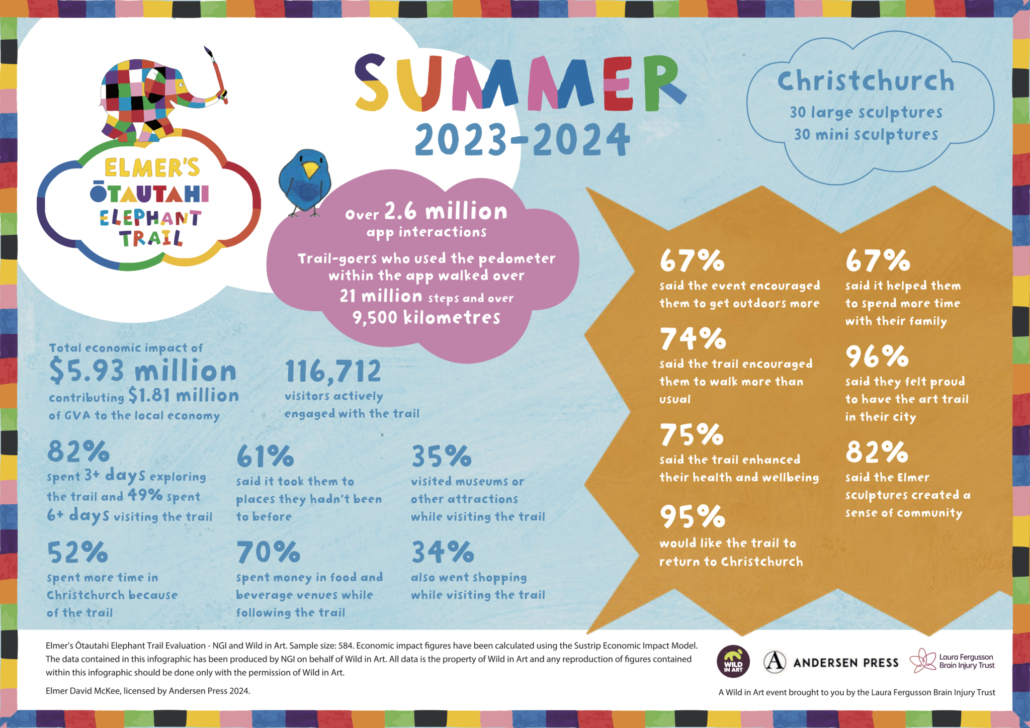
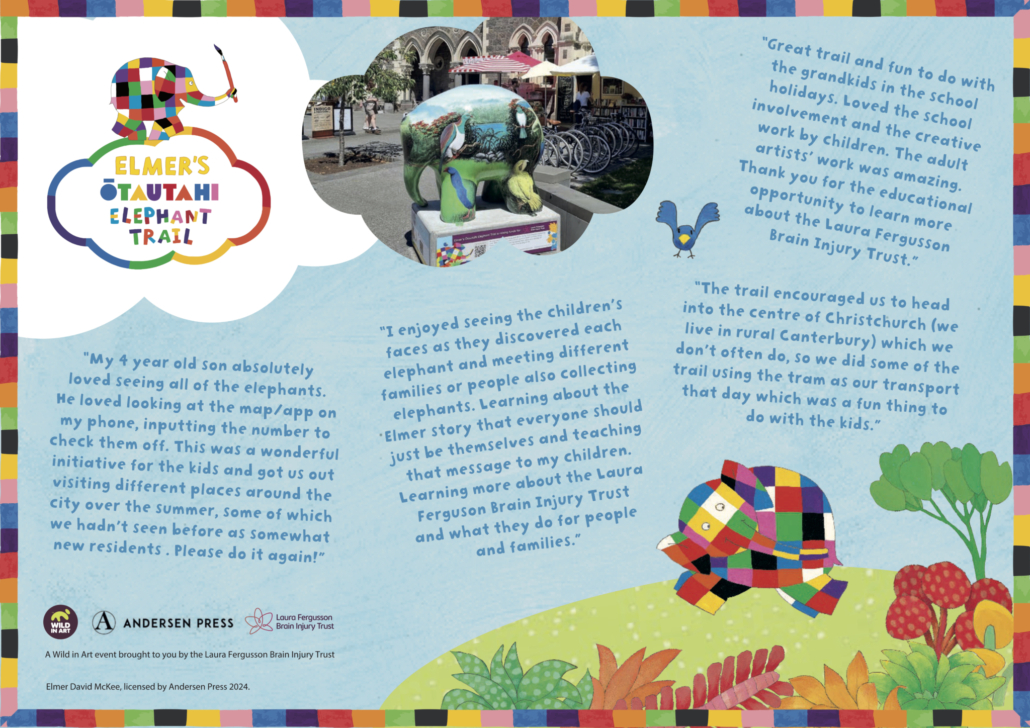
Thank you for joining us on Elmer’s Ōtautahi Elephant Trail!

We are overwhelmed with gratitude for the immense support and dedication that made the trail possible. From sponsors to artists, volunteers to community partners, each of you has played an integral role in bringing this vibrant and impactful trail to life. We want to thank you all for your countless hours of hard work and the boundless generosity that has shaped this unforgettable art trail. As you can see, your impact on our city was tremendous.

As we bid farewell to this chapter, we look towards the future with optimism and determination. Our journey continues as we strive to build a modern, world-class facility providing our essential services under one roof. With your ongoing support, we can turn this vision into reality and continue making a meaningful difference in the lives of those affected by brain injury

A huge thank you to Charlie Chase who has raised a whopping $5000 for Laura Fergusson Brain Injury Trust in honour of his friend, John Jefferson.

Charlie achieved this by cycling the Sound to Sound Cycle Brevet, (a 1500km bikepacking route from Queen Charlotte Sound to Milford Sound) raising funds via Givealittle along the way.

Charlie explains, “The last dinner I shared with my good friend, John Jefferson, before he passed, he spoke of wanting to complete the Sounds to Sounds Cycle Brevet when “time” permitted. But time never permitted, so I took the opportunity to ride in his honour, and support the Laura Fergusson Brain Injury Trust. The Laura Fergusson Brain Injury Trust has become personal as they are helping John’s son through some difficult times following an auto accident.”

Initially Charlie hoped to raise $1000. His goal was quickly reached so he aimed for $2000. Charlie ended up raising an incredible $5000 for Laura Fergusson Brain Injury Trust. He describes his cycling journey as a mix of soul testing xc/mtb trails, local flavor coffee shops and cafés, conversations with others on the same trek, moments of pain and memories of a lifetime.

Rachael Jefferson acknowledged Charlie’s efforts. “The Jefferson and Low families thank Charlie very much for his support for the LFBIT, and we are very proud of what he has achieved.”

Charlie adds, “It has been a privilege to complete this brevet in honor of a friend, (and I’m 100% certain Jeffoe would have loved it,) and facilitate a wonderful donation to Laura Fergusson Brain Injury Trust in the Jefferson family’s name. Thank you so very much to all who contributed. And thank you all for the kind words of encouragement along the way.”

We are truly humbled and grateful for Charlie’s incredible efforts!

Can Do Catering has an incredible team in the kitchen, and today we would love to acknowledge Wendy!

Wendy has been a part of the Can-Do Catering team for the past eight years. Currently, she works four-six hours, two to three days a week, although this does vary from week to week.

“I love my work, everything about it,” says Wendy. “Meeting people, they want to know everything about it!”

A regular day at work starts with setting up her workstation ready to commence preparing vegetables, savoury pastries and sausage rolls for customers’ orders.

One thing Wendy loves is the bliss balls and is even nicknamed the “bliss ball queen” by her co-workers.

Assisting with large-scale event setup, including conferences and weddings is something Wendy is passionate about.

Wendy loves her work with Can Do Catering and is incredibly hopeful that it will continue well

“The food is unbelievable, it is presented amazingly.”

Thank you Wendy for all of your work with us! It is fantastic to have had you on the team for so long!

Last week, two team members, Peta Murphy ( Senior Speech Language Therapist) and Katie Hodge ( Service Development Manager) presented at a conference in Whanganui addressing The Hidden Cost of Violence – Unveiling the Silent Epidemic.

The topic of the workshop was The Impact of Strangulation on the Brain- Practical Solutions and Accessing Timely Support.

The conference brought together experts, researchers, professionals, advocates and those with lived experience to deepen the understanding and ability to respond to traumatic brain injury caused by interpersonal violence.

The aim of the conference was to strive for innovative solutions to enhance prevention strategies, support systems and survivor-centred intervention through knowledge exchange, and collaboration.

Thanks Peta and Katie for this important piece of work.

The Laura Fergusson Brain Injury Trust has been awarded funding from the ACC Innovation Fund for the development of an Employer Peer Support Service. The latest round of funding focused on projects that support recovery at work after an injury, so that injured clients can stay connected and engaged in their workplace while they’re recovering.

From 39 eligible proposals submitted from across New Zealand, LFBIT was one of two organisations awarded funding for their projects.

Established and managed by Katie Hodge, an extension of our Traumatic Brain Injury (TBI) Peer & Whānau Support Service, the LFBIT Employer Peer Support is a project that aims to train and support three employers to act as peer support to other businesses returning clients with TBI to the workplace.

The project also includes TBI training opportunities for large organisations and vocational providers.

We know that recovery from TBI is complex and not quick. The peer support service will help employers understand the workplace adjustments and changes to routines needed to enable success and sustained return to work. Congratulations to the team on being awarded this funding!

Today we would love to celebrate Tommy, one of the wonderful team members at Can Do Catering.

Can Do Catering provides paid employment for a number of residents and clients of Laura Fergusson Brain Injury Trust, for whom mainstream employment is not an option due to their care needs. Tommy began his work with Can Do Catering eight years ago, and he has loved his time there!

Tommy works in the essential business of delivery. Alongside his co-worker Jane, Tommy is the face of delivery at Can Do Catering. If you have ever been lucky enough to have an event catered by Can Do, you likely will have met Tommy!

A regular week will often involve coming to work on a Monday and Wednesday, although this can change depending on what days a delivery is needed. Tommy has worked on different functions, from business catering to weddings. The deliveries take Jane and Tommy all over Christchurch and beyond.

Tommy thoroughly enjoys being involved in the community and says he is looking forward to the further expansion of Can Do Catering!

Thank you Tommy for all of your hard work! It is always such a joy to have a chat during the delivery of what is always an incredible bite to eat from Can Do Catering!

Life before 18 July 2020 was pretty hectic. I’m a Mum to three boys, a wife and a primary school principal of a little Catholic school. My life was a mix between running the household, caring for my family and dealing with the variety of problems and tasks you get when you’re a teaching principal of a little school.

We had just sold our house and had moved into temporary housing, waiting for our new house to be completed. I was pretty shattered and felt exhausted on many levels!

During the last weekend of the July holidays, my husband and I had decided to go through to Christchurch for a couple of nights. On the Saturday night, we were on our way to go out for tea, and as it was very cold, we thought that it would be a good idea to jump on a Lime scooter instead of walking.

My husband was in front of me and I followed. I don’t remember much after that, as I was hit by a car as I was crossing the road. I became aware of my surroundings a while later in one of the trauma units at Christchurch Public Hospital. After many hours, tests and treatments, I was taken to the Neurology ward.

My left wrist was broken and in a cast. I had a deep wound in my forehead that required plastic surgery, a fractured skull, a face full of bruises, the mother of all headaches that wouldn’t quit and I was vomiting. Although I was confused about why I was injured, I knew what day it was and who my family was. I slept a lot! I struggled with my balance and felt very dizzy, needing assistance to get out of bed and go to the bathroom. I spent 10 days in hospital and was extremely excited to get back to my family.

The next part of my recovery is all a bit of a blur – it seemed as though one day merged into the next. It was a longer period than I initially thought I’d be in, a period I called the “Four Fs” – Fogginess, Fatigue, Frustration and Fear. There was a lot of tiredness, a lot of sleeping and a lot of crying.

I found that I was tired after doing simple tasks such as doing the dishes! My initial goal was to do simple routine housework and build on it as I could. I had help to keep on top of the bathrooms and vacuuming, but I worked on achieving the rest throughout each day with lots of rests in between.

My balance was still an issue, but once I’d had some treatment, it had improved enough that I didn’t need to steady myself by holding onto the walls.

Therapists from Laura Fergusson Brain Injury Trust visited me every week at the start, talking me through what was happening and helping me set goals for my recovery.

I thought that I’d be back at work pretty quickly as I had no idea how severe my injury was. Every goal I set myself – workwise – had to be reset!

Very gradually, I made myself get outside and go for walks. My dog and I would walk to the recycling and rubbish bins daily – probably only about 100m in total. Then we would add going to the end of the houses in our block – another 100m in total. I wouldn’t do this daily, only when I felt I could.

I found this part of my recovery very challenging. I wasn’t used to putting myself and my health first. I wasn’t used to struggling to do things. I was a capable, intelligent woman who was independent and fierce. I identified with being a career woman who was in control.

I had to shift my thinking, which was huge. I had to accept help. I had to relinquish control at home and at work. I had to focus on myself in order to recover.

We finally moved in to our new house early September. I felt as though I had room to breathe and I had a purpose each day. I began scheduling my day in my diary, making sure I wasn’t overdoing it and going back to the boom-and-bust attitude I had before my accident.

Scheduling appointments for the week, daily chores/tasks, walks/exercise, social events and also scheduling in regular rests throughout the day was extremely helpful. Not only did I feel more in control, but it was also a creative outlet for me.

I started going to physio for both my neck/back/shoulders and hand/wrist/fingers (which we discovered had also been broken after my cast was removed). My aunt drove me to and from hand therapy appointments in Rolleston. The movement of vehicles and the surrounding scenery left me feeling very tired, and I had to give myself time in between and after journeys to recover. Eventually, I was able to manage longer trips and my recovery time would be shorter.

My concussion physio was still visiting me. However, I began seeing a psychologist to help me work through all the feelings and issues that were coming up, and this reinforced the goals that I was working on. My psychologist helped me find my joy. We spoke about what I found challenging, how I spoke to myself, what I found important and what gave me the ‘good’ feels. My therapists worked on helping me achieve the goals that I was working towards.

After the Christmas holidays, I returned to school. Once again, I thought I’d be able to do more than I actually could. Time and time again, I would have setbacks – I’d set myself goals of how long I could be at school, I’d push on and my recovery would take a dive. I spent all of 2021 trying to get back to school full-time. The best I could manage was Monday, Wednesday and Friday 10am–1pm, still only doing admin work. We discovered that, if I tried to increase my hours too quickly without a ‘consolidation period’, the headaches and fatigue would return. Progress was slow.

Now, nearly two years on, after resetting my goals, I am finally back in the classroom two days a week but still working on being in the office full-time on the other three days, with later starts and early finishes. Life at home has become very quiet as all the boys are now at university, so I find I have less pressure to be on call for them! I still get fatigued, still get headaches – especially when I do too much.

Changing the way I speak to myself has helped me come to realise that my recovery has been a very personal journey. Understanding and identifying my emotions and limitations has been the biggest challenge – and continues to be ongoing. I now tell myself that it’s OK to feel like this, it’s normal for recovery to take time and to have setbacks.

Doing things that I enjoyed was the most helpful thing in my recovery. Planning out my day/week in a creative way by journalling, doing a little gardening, walking (increasing my time and distance as I felt I could) and rekindling my love of reading – all these little things gave me happiness and purpose. They made me feel good about myself. Going for a walk is now my ‘go to’ when I feel overwhelmed or frustrated.

As I look back on the last 22 months, I have come a long way, and although I may never be 100% the same as I was, maybe that’s not a bad thing – my life was not sustainable.

I also think that it would be important for family members to have some support. I was fortunate that my husband had some experience dealing with concussion, however not to the same extent as my injury. He would have benefited from someone having a chat with him about everything – not relying on me to pass on information.

If I had advice to give someone that was in my situation, it would be to give yourself time and go easy on yourself.

Find what gives you joy.

Our incredibly skilled Community Nursing team at the Laura Fergusson Brain Injury Trust is led by Val Sandston, our Community Nursing Manager.

Val has over forty years’ experience as a Registered Nurse. After starting her career as an Enrolled Nurse, she entered further education to improve her skills, and has spent the majority of her Nursing

career working in Spinal Injury and District Nursing. Val also has a postgraduate certificate in wound management and is passionate about working in this area.

“I believe one of my key attributes is my communication which I feel is open and honest,” says Val. “I have a good sense of humour which can be beneficial in different situations.”

A usual day for Val and our nursing team involves seeing our group of regular clients in the morning, and then undertaking assessments for clients with specific needs in the afternoon.

We may see people for wound care, pressure injuries, bladder and bowel management, for continence products and other consumables.

The Community Nursing Team travel in the Christchurch and wider Canterbury region seeing ACC clients, mainly with traumatic brain injury or spinal cord injury, in their homes.

“I enjoy the collaboration in working at LFBIT – collaboration with outside agencies. our own large interdisciplinary team and our small nursing team. I enjoy the autonomy of the role, being able to supervise my nurses and support them in their work.”

“We pride ourselves on being timely, efficient and professional.”

Take away message from Val & our Community Nursing Services:

· We travel in the Canterbury Region

· We see people at home

· We are timely and can respond quickly

· If covered by ACC there is no cost

· Referrals can come from your GP, specialist or self referral

There’s a new, incredibly cool vehicle in our fleet!

We are so thankful to our friends at Vehicle Adaptions, who pledged a significant amount of in-kind work towards our new assessment services vehicle.

Vehicle modifications can create a huge difference in a person’s independence and quality of life. Sometimes, all it can take is one small change to make independent transportation possible. In our new car, we have interchangeable styles of left- and right-hand controls with toggle switch indicators, an electronic left foot accelerator, various shaped standard and electronic steering wheel spinners, a transfer bench, and an indicator extender.

“It’s a pleasure for us at Vehicle Adaptions to help our friends at Laura Fergusson Assessment Services by modifying this assessment vehicle for the use of their clients,” says Margaret Hawkes, Director. “We love seeing the difference that vehicle modifications make to clients’ lives.”

“I really love the feel of the car that I can say that I love to drive,” says a client of LFBIT.

Thanks again to Vehicle Adaptations for their essential work! The impact you have cannot be understated, and we look forward to working together in the future!

Skip to content