Archive for category: News

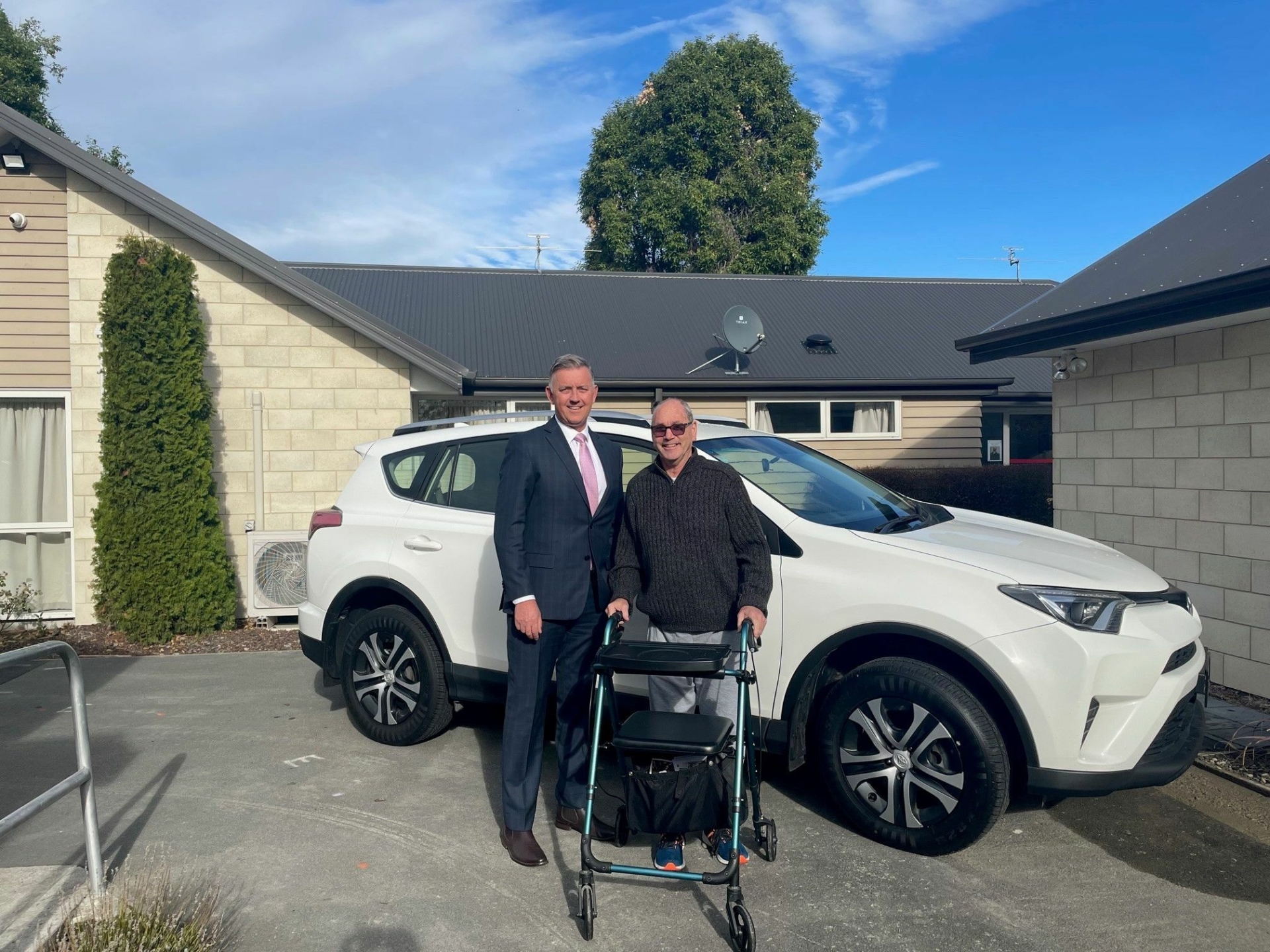
The wonderful team at Miles Toyota has donated a Toyota Rav4 to the Laura Fergusson Brain Injury Trust for use at our new Te Orewai small group living site. The vehicle is used to transport their clients to and from GP appointments, workplaces, shops, and other day to day activities.

Kim, a resident of Te Orewai, says “Thank you so much for our new vehicle. It is a joy to drive around in and so good to have a vehicle that we can use daily. It’s nice to travel around in a vehicle that has good visibility and easy to get in and out of.”

“it is massively helpful having the car,” says CEO Kathryn Jones. “All of those using a walker can get into it safely, and there is plenty of room for luggage on holidays to Hanmer Springs.”

To give back in a small way, LFBIT has been providing workplace warrant of fitness sessions to the staff at Miles Toyota provided by our dedicated team of specialists.

CEO of Miles Toyota, Mark Mills, has supported our commercial relationship for many years through the supply of multiple vehicles to LFBIT. “We provide fit-for-purpose vehicles to help transport and retrain people with injuries and make modifications when needed – like supply and fit hand controls. LFBIT is a great organisation with a strong community focus and aligns well with our values and commitments.”

We are tremendously grateful for the continuous generosity and support that Miles Toyota provide to help our mission of providing “ordinary life opportunities” for our clients.

MILES TOYOTA
221 Montreal Street, Christchurch 8011
PO Box 22482, Christchurch 8140

0275 532678
03 379 0610
MMills@miles.co.nz
www.toyota.co.nz/miles-toyota

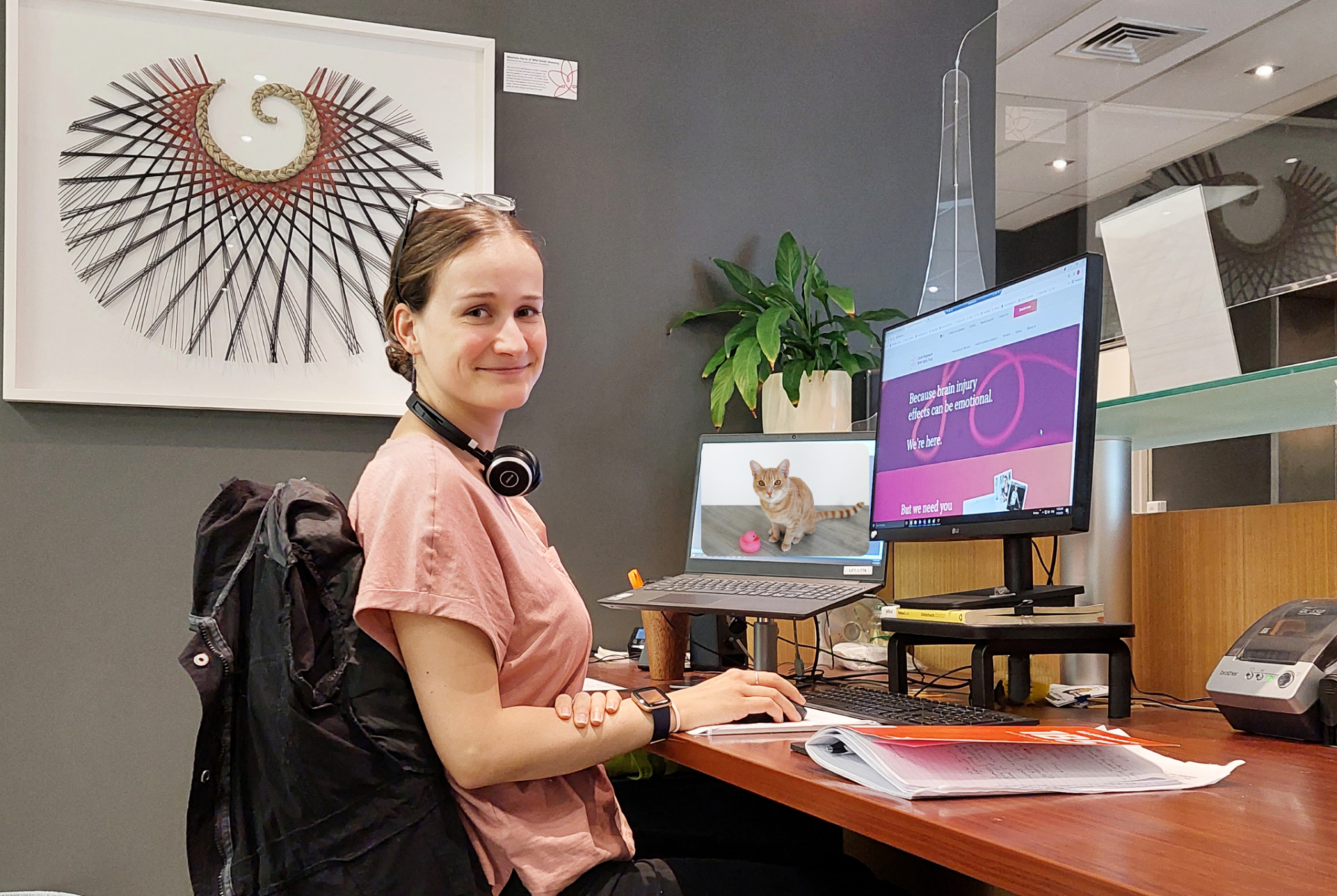
If you have ever found yourself at Brougham St, you’re likely to have found yourself the joy of meeting Lorna, our wonderful receptionist. While she will be the first person you see at the front desk, her contributions to LFBIT go far beyond, and it is safe to say we would not be the same without her!

Lorna has worked with LFBIT for just over a year, after searching for work not by role, but rather with an organisation she believes in. Her favourite parts of the job vary from day to day, but she loves working with the team every day and being helpful wherever she can. “The clients are pretty amazing,” Lorna adds, “I just try to add a little bit of humour or joy to their day as they walk in.”

Lorna is also part of the wellness committee, which was established this year to increase the support and wellness of staff. A role on this team has been a natural fit for Lorna, aligning well with her personal interests and strengths. The wellness committee is exploring ways to help staff in their work and home lives using methods from our very own psychologists, occupational therapists, and the rest of the team, to try and build a nurturing environment for all.

“One thing I really love about the organisation as a whole is that there is an openness to improving and actually trying to make this workplace not just amazing, supportive, and life-changing for the clients, but also for the staff.”

There are some very important next steps Lorna sees for the wellness committee, the top priority being the introduction of a therapy cat. And she has one in mind, being her own, Ryleigh! “He would be an important member, he’s got a lot of important ideas along the lines of ‘meow,’ and can bring some unique things to the table – ‘perhaps some fur with a dose of serotonin and dopamine,’ anyone?”

In addition to her efforts to increase staff wellness, Lorna is also a champion of inclusiveness at LFBIT. There has been an effort to increase the acknowledgement and incorporation of biculturalism. This has included incorporating te reo into signage, the encouragement of staff to speak, and openness to learn more about the language.

“We have been working with our amazing cultural advisor Francis Fasso, baby steps that will hopefully lead us to the bigger picture. I think we are making an active effort in improving and making sure everyone is included, not just with culture but with sexuality, race, religion. We try to approach it with a holistic point of view.”

Lorna’s work is much appreciated among staff. “Lorna is more than just a receptionist; she’s the glue that holds Brougham St together,” says Megan Bond, Clinical Administrator for the Assessment Team. “There is so much that she does for us that we have no idea about and we would be lost without her. She’s a favourite with clients and staff alike and a joy to work with.”

Lorna says it is awesome to see the growth in awareness of LFBIT since she started working here. “The staff are amazing and deserve so much credit for the hard work they do, and for the care and attention that they put into every day. They genuinely change lives and I hope they realise that.”

This admiration goes both ways! We are so thankful for all of the work that Lorna does for LFBIT, and are grateful for the cheery culture she creates right from the front door!

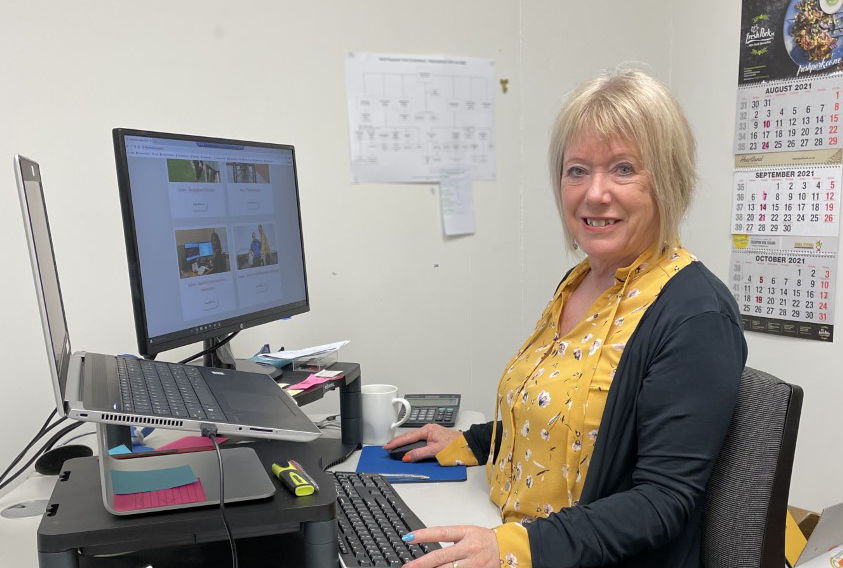
While we have an amazing team on our frontline, we have an equally amazing team who work behind the scenes and create a foundation for our services. If you’re lucky, you will have the pleasure of meeting Lynette Harrop, our Senior Payroll Officer/HR Advisor, who is one of the kindest and helpful people you will meet.

Lynette has always loved working with figures, starting in a payroll position in Australia, and has been hooked ever since. It is one of the rare roles where Lynette is able to deal with all team members within the organisation, which is something she has always enjoyed.

The role of the Laura Fergusson Brain Injury Trust in the community is something that Lynette has come to have a great appreciation for. She says, “I feel everyone shares the same vision and is dedicated to the mission of helping clients both in the community and our residential home.”

“I consider it a privilege to work with Lynette,” says Alison Klopper LFBIT Human Resources Manager. “She has a wealth of Payroll and HR knowledge, with over 20 years of that experience gained in the healthcare industry. Lynette has a very calm, friendly demeanour and takes everything she is asked to do in her stride. She has taught me much about the intricacies of payroll and I look forward to many more years of us working together.”

With our recent move to Brougham Street, Lynette is happy to be in the new office, and for the opportunity to work around the team. She is looking forward to moving to our purpose-built facility, where all staff at LFBIT can work under one roof.

When Wendy, one of our residents at Te Orewai, had her second fall from her two-wheeler bike in the space of a few weeks, she knew that it was time for a change. An Occupational Therapist’s assessment confirmed that her balance was not as good as it had been and that riding down to the shops on her bike was going to have a lot of risks associated with it.

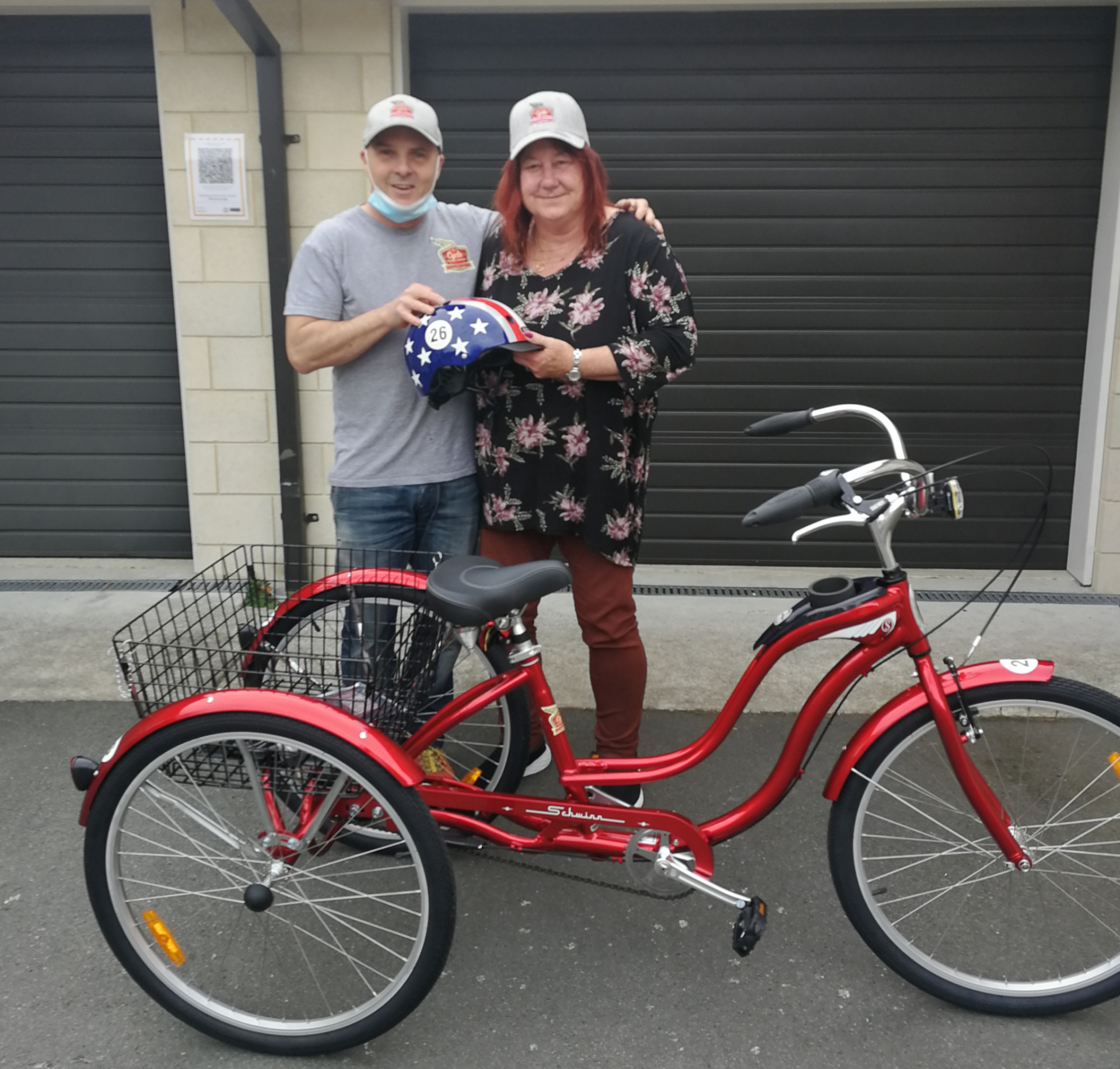
Wendy briefly considered a mobility scooter, but she was keen to maintain her fitness levels, so an adult trike was the next option. Wendy, together with Ron, Manager at Te Orewai, undertook some research and decided that The Cycle Trading Company on Elgin Street in Sydenham had a very good range.

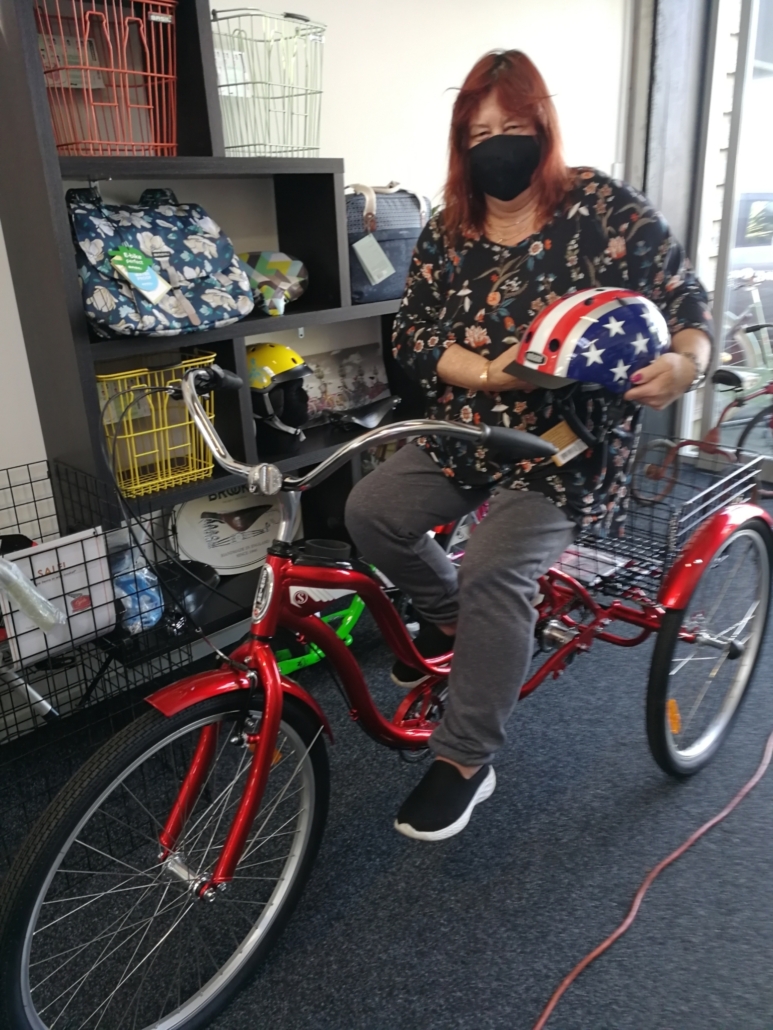
They were welcomed by Rick Lamb who showed them the options. Wendy was keen to try a very stylish and sporty looking metallic red trike. Rick confirmed that it was the right height for Wendy, and gave her some tips on the difference between riding a two-wheeler and a trike. After five minutes of riding around the forecourt, Wendy found that the bike was really easy to ride, was very stable, and it had a comfortable seat!

The next task was to choose a new helmet out of an impressive range of styles. Wendy chose a stars and stripes helmet reminiscent of the Easy Rider movie.

While they were shopping, Wendy told Rick that she was the first woman in New Zealand to race sprint cars and that it had been quite challenging as not all the men were keen on being beaten by a woman. As the arrangements for the assembly and delivery of the new trike were being made, Rick asked Wendy what her old racing number was.

A few days later, the trike was delivered, and Wendy was delighted. Despite it being a damp, showery day, she was quick to get on and go for a ride.

The biggest surprise for Wendy was that Rick had arranged for a sign-writer to put her old racing number (26) on her helmet, as well as the front and the back mudguards of the bike. In addition, as a gift from one racing driver to another, Rick gifted the helmet to Wendy, refusing to let her pay for it.

“The small donation was the least I could do,” says Rick. “I was touched when I met Wendy. When she told me she used to race cars, I instantly felt connected. Plus, I really wanted to put a smile on her face!”

Wendy was blown away at his generous offer and says that the racing numbers reminded her of her younger days when she was racing sprint cars, showing the men that women can do anything!

This week is Speech-Language Therapy Awareness Week, and we are thrilled to highlight the work of Laura Silcock, one of the wonderful speech-language therapists in our team at the Laura Fergusson Brain Injury Trust.

Laura studied speech and language therapy at the University of Canterbury, before moving to Auckland where she began working in brain injury, and has done for the last seven years. Six months ago, Laura joined our community team and has been working within there, as well as helping out in our assessment and residential teams, and within our Reconnect community support group.

The role of a speech-language therapist is a lot more involved than the title suggests. Naturally, the physical execution of speech and the construct and idea of language is a huge part of the role. But, in a general sense, the role is more about communication. Laura says, “It’s the thinking that you need to do to communicate, that is one thing that is unique to us as humans, interacting with others through words and facial expressions. Speech-language therapy is about helping people build meaningful connections in their lives, which we do through communication.”

Another large part of the role of an SLT that is rather unknown is the work done to support people with swallowing impairments. The muscles used in speech are also used for swallowing, so, many SLT’s work in this area. “It is really rewarding to help people recover function or improve sufficiency to swallowing function as eating and drinking is a key contributor to quality of life. Seeing someone drink water or eat a burger for the first time is incredibly fulfilling.”

The variety of work is something Laura says is an awesome aspect of working at LFBIT. On a regular day, she will work with many people in different stages of their rehab journey. “No two brain injuries are the same and no two clients are the same. Creating a real client-centred, individualised approach is important, because of that we have to adapt, change and learn, which is really cool. It is challenging and there is always something new!”

The opportunity to work in a team full of different talented professions is another aspect that Laura enjoys. “We get a lot of input from a lot of different professions. Not only is it cool to learn about, but it is also really cool for the client. They get a real holistic view of their life and rehab. You get to see stories of these amazing people doing ordinary things and getting on with life, and it is really special.”

Rangatiratanga, the theme of speech-language therapy week, is the idea of self-determination, and autonomy to make decisions. Laura sees many clients who, because of their communication impairments, have lost an aspect of rangatiratanga. Laura finds it incredibly special to have the opportunity to help those whose voices or challenges may not be acknowledged, helping them participate in ordinary life situations. For one client of Laura’s, it was as simple as being a part of parent-teacher interviews. An activity that many would take for granted, but, it was especially important for the client.

“Not many people know much about the effects of brain injury, so we need to do a lot of work to educate people on how to support these people. Our goal is to help them do the things that they should be a part of and can do if given the right tools and supports.”

We want to honour the work that Laura and all of our speech and language therapists do here at LFBIT. The difference they make in their clients’ lives is truly special. We are so thankful for the way they engage with and care for those they work with.

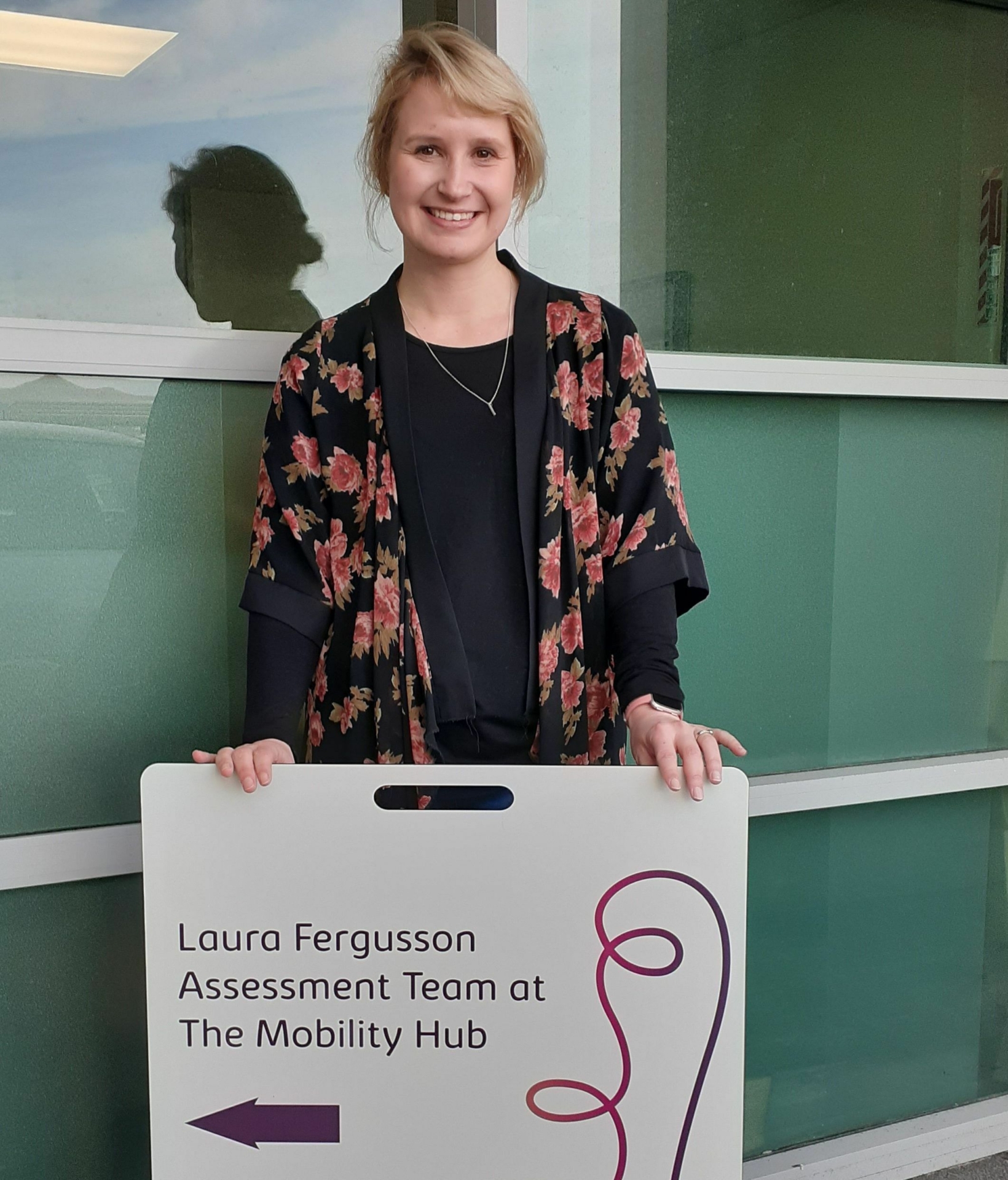
We have no shortage of friendly and enthusiastic staff here at the Laura Fergusson Brain Injury Trust. Courtney is one of our exemplary occupational therapists, whose skills and personality are a huge asset to our team.

Courtney works with clients after injury, in discovering new options for mobility in wheelchair and seating, and for extra-curricular activities. This involves going out into the community, assessing clients, recommending equipment, and providing education to increase accessibility that aligns with clients’ injury-related needs, goals, and abilities.

Her work extends beyond powered mobility, as she works with clients in creating custom seating for complex postures, positional supports to improve comfort in bed, and pressure injury management. This wide range of services is something that Courtney and the rest of the Mobility Hub clinic excel in.

Courtney focuses on supporting clients in meeting their individual goals and needs. She firmly believes that clients know their bodies best. “I’m only there for a moment in time and I feel very lucky that I am a part of their journey. It is a collaboration. I know what options are available out there and they know what’s going to potentially work for them.”

Courtney enjoys the rewarding experience of sitting with the client, working through the assessment process, discovering the core issue, and exploring it from a holistic perspective. However, nothing beats seeing the client over the moon after being set up with their new equipment. “It gives you the warm and fuzzies, you’re just there for a small part of the journey, but, you’ve made a difference.”

Courtney has a keen interest in developing the paediatric side of Laura Fergusson’s Assessment services, as well as continuing work with clients in their early power mobility skills.

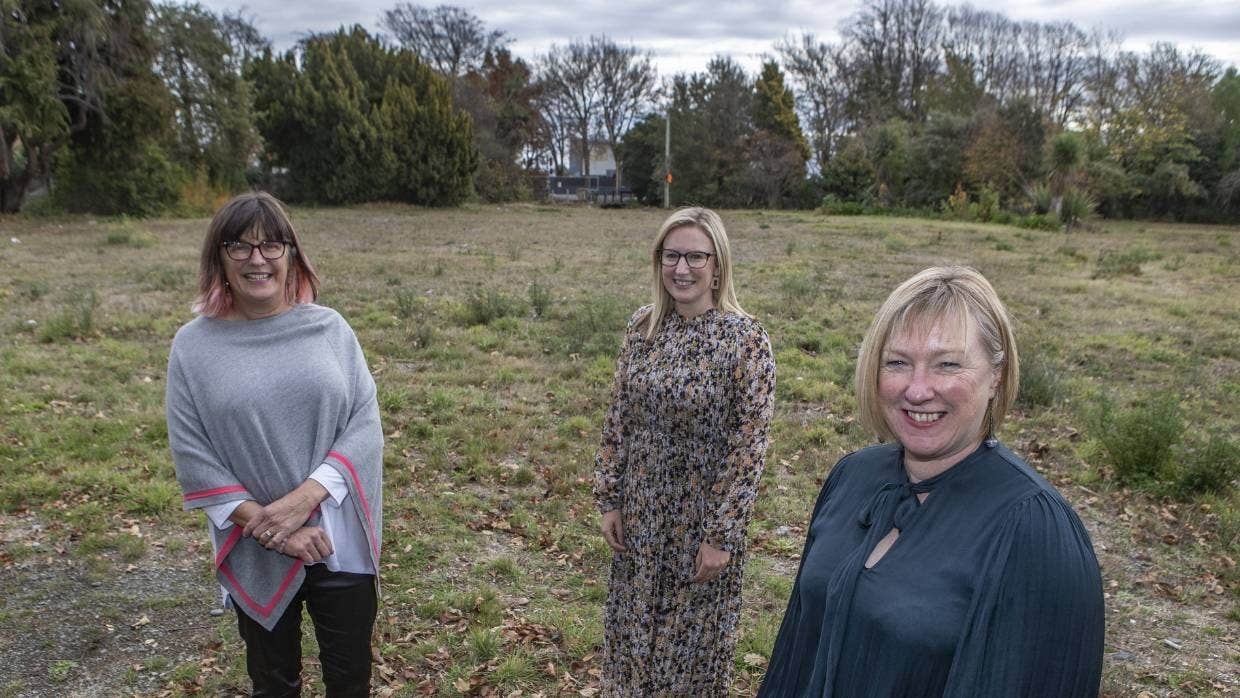
We are thrilled to announce that we have purchased land at 126 North Parade and 37 Poulton Ave, the former location of Marian College.

This site meets all of our requirements for building a new purpose-built home for all of our services (assessment, rehabilitation and residential support), all located in one place.

The new building will enable us to support the 1000 people with brain, spinal and other complex injuries we are working with at any one time. Not just now, but well into the future.

Click here to read the recent Press article about our new home, and stay tuned for further updates!

At the Laura Fergusson Brain Injury Trust, we have a team of fantastic leaders who manage each of our services. Leanne Leadbetter is the service lead for our wheelchair and seating service. Leanne works with clients to establish their goals and then sources the correct equipment to minimise environmental barriers and enable them to reach their potential.

A regular day of work varies, from carrying out wheelchair and seating assessments in the Mobility Hub clinic, to working with transport and housing modifications assessors to make sure the clients wheelchair, vehicle, and house all work to suit the needs of the client. This allows the client to get out of the house, socialise, and return to regular life.

“There is a bit more science behind everything, but at the end of the day it is about making sure that the person has meaning in their life. Not just in one domain, you have to look at it holistically.”

Of course, there is also the biological side to wheelchair and seating, where Leanne works to make sure clients are sitting straight and not causing any harm by sitting incorrectly. If someone consistently sits crocked, their lung capacity can decrease as they age or skin ulcers can develop. So, sitting straight ensures they can live without causing any future medical issues.

As well as helping people live a fulfilling life, Leanne loves coming into work to be a “professional problem solver.” She says it’s all about finding outside of the box solutions to complex problems to meet client’s needs and goals. She loves finding solutions through customisation, grabbing things off of the shelf and creating something out of it.

Leanne has worked with people with spinal injuries throughout her whole career, both in hospital settings and in private practice. Through LFBIT, she has had the opportunity to develop the Mobility Hub clinic-based service where creative thinking and education of others can occur, future-proofing the skills that she has built up over her career.

There are limited training grounds for her combination of skills, so over the past two years, she has trained others in social rehab assessments, as well as wheelchair and seating with clients with complex needs. This training has resulted in a team of occupational therapists and physios who work together at the Mobility Hub.

“It’s a really good training ground, hopefully I will have passed on most of my knowledge and expertise by the time I leave for it to be recognised as a Centre of Excellence. So, the people I’ve trained will then become the trainers, that’s what I’m hoping.”

Looking to the future, Leanne is excited about the new technology that is becoming readily available to allow those in the profession to assist their client’s even more. Recently, Segway technology has been implemented into wheelchairs, and the results have been quite special. This allows a client to move around in their wheelchair by shifting their body weight, creating more mobility for those who do not have many options. “I trialled a new product with a client and it was a wow moment. It was an incredible experience for him and it was pretty cool to see. Watch this space for new ways of moving about!”

Skip to content